Hydrogen is the first element of the periodic table, and its properties are very different than many of the elements near it. It is in the general category of nonmetals, but the nearest nonmetal is carbon, which is basically on the other side of the periodic table! Some people consider hydrogen being in its own little “subcategory”, but I consider it to be in the “other nonmetals” subcategory that includes carbon and nitrogen.
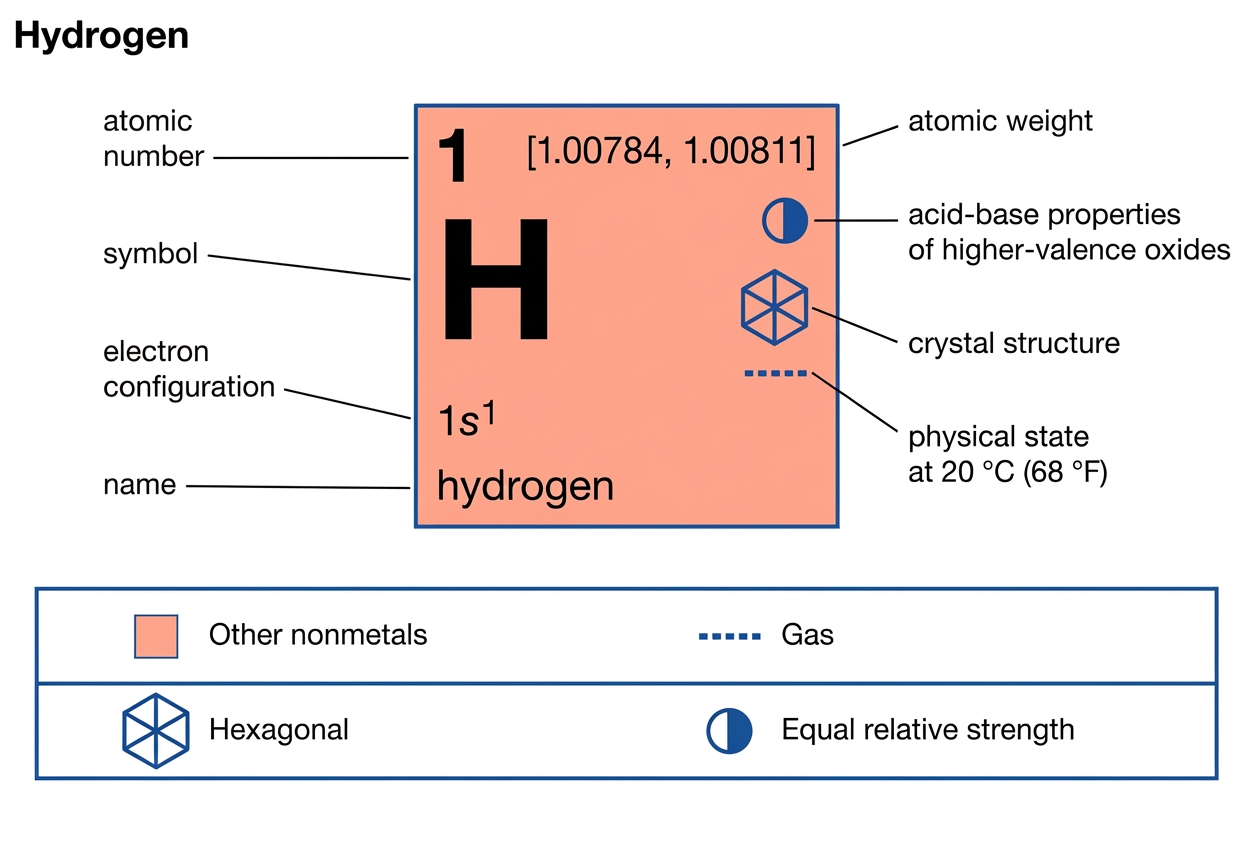
Hydrogen has an atomic mass of 1.008, atomic number of 1, and it has 2 stable isotopes, H-1 and H-2. H-1 is the normal hydrogen isotope, also called protium, that is the main type of hydrogen in the water you drink, and in the cells of your body. H-2 is a rare hydrogen isotope, also called deuterium, that has not only one proton, but it has an extra neutron. It appears in normal hydrogen-containing molecules every once in a while. The last unstable hydrogen isotope, H-3, is extremely rare and has one proton, as with every hydrogen isotope, but it now has two neutrons, therefore adding up to three atomic mass units because neutrons and protons have about the same mass. It’s full electron shell is simply 1s1.
Hydrogen is a very versatile atom, and it finds itself in nearly all molecules. Most organic molecules have a chain or a ring made up of different amounts carbon, nitrogen, and oxygen, with hydrogens filling up the empty “bond spots”. Hydrogen is an example of a diatomic element that, in it’s normal form, is not just a single hydrogen. Standard hydrogen is two hydrogens single-bonded to each other, hence it’s chemical formula is H2.
Let’s do some more statistics. Hydrogen makes up about three quarters of the universe by mass! Even though hydrogen is the lightest element, still a large majority of the mass of the universe is hydrogen! Over ninety percent of the atoms in the universe are hydrogen. (Three quarters is different than ninety percent, but the three quarters number is for percent mass of the universe. The ninety percent number is the sheer number of atoms.) In the atmosphere though, hydrogen makes up a negligibly tiny portion. It’s not even in the top 8!
Here are some pictures to help you out:
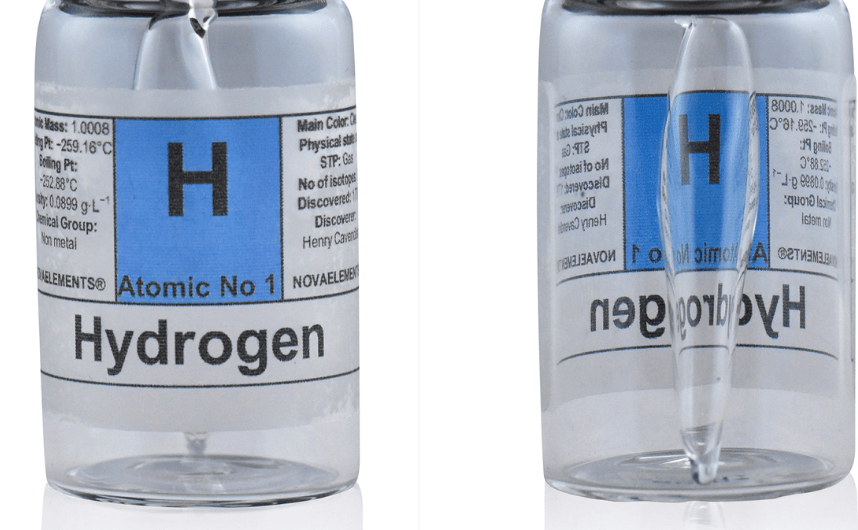
This is the sample I have. The photo shows an identical product from the same company (not my exact piece, but for all practical purposes it is the same).
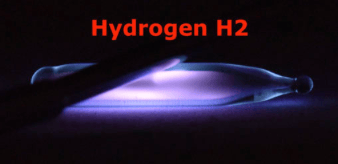
Low-pressure sample lit up with a tesla coil
Video demonstrating flammability, (not my video but from my favorite Youtube chemistry creator)


Leave a Reply